Zoomout: Starbucks to Sell Burgers? A Retail CX View
Starbucks CX Point-of-Sale Challenge: Intro
 I am not a coffee drinker, but I generally like the Starbucks brand from the business development and the tenant-patron perspectives. As we know, three things matter in legacy retail ecosystems – location, location, and location. Starbucks has done exceptionally well from that standpoint: it has all the right locations to lure you inside. But when it comes to its tenant and customer experience, there may be room for improvement. I was “there” to see Starbucks become an American landmark of the worldwide coffee culture. Even if you are not in love with Starbucks’ coffee, chances are that you go to a Starbucks store every now and then – to use the free internet, to buy a bottle of water, to meet with a colleague, or just because your friends decided to meet there before going to a concert. What can go wrong at a Starbucks in terms of tenant experience and retail customer experience? Or for that matter, how could you improve Starbucks point-of-sale systems to improve its overall CX and its global customer success?
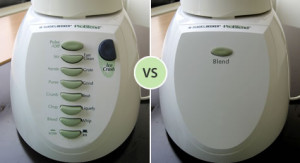 In working with engineers of all kinds, whenever my modest inputs are required to help ship better products, I like to say this: “Let’s make this feature work like a drum!” This expression is not my own – I “inherited” it from a good front-end developer friend, but it represents a principle in product design that I follow (more on that later). And believe it or not, it all started with cars and drums and LSD… as in
 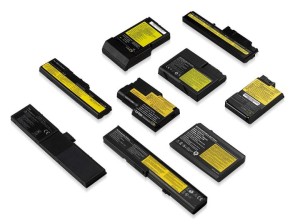 Is usability of portable devices better when their batteries can be removed on the fly? Definitely. As a business developer who has spent countless months on the road in my career, I am yet to find a way to justify preferring a portable power bank over a simple, removable battery. Still, there are many schools of thought on this topic – both regarding Apple’s products specifically and regarding
  Wireframes and prototypes – as well as software used for wireframing and prototyping – make the process of creating an app, a website or any software or hardware product notably easier – by simplifying the product and allowing all involved in its development to focus on the product’s functions and user interactivity. Everyone in the production team – from stakeholders and information architects to project managers and quality assurance personnel – needs to understand how an application or website will work and what it is intended to do. For that purpose, wireframing and prototyping are not synonyms, technically speaking. Let’s look at their differences and similarities.
 In my years of interacting with screens – computer displays, television sets and proprietary video hardware – of varying sizes and intended uses, I find one factor to have a much bigger role in retail customer experience and in general usability than the title of this post may suggest – aspect ratios. Over 20% of the world is using electronic displays or TV’s with wrong aspect ratio settings, and it turns out that this has deep physiological and psychological effects that affect the users, the patrons (in the landlord-retail context), the product manufacturers, and everyone in the marketing and IT sectors. Should anyone care about this problem? I have done some research to find a few interesting answers.